
Atascosa 72-Hour Release Access
No official rolling 72-hour release list was found on the Atascosa County Sheriff's Office website. There is no verified county feed URL, field set, refresh schedule, photo flag, or retention window. The same sweep found no ACSO jail app or historic release archive. A page operated by someone else is not an official Atascosa record merely because the county name appears in its heading.
The proper three-day route begins with ACSO Booking for current status and Jail Records for the release or transfer transaction. State the exact start and end timestamps. This matters when “the last three days” crosses midnight, a weekend, or a holiday. Ask for the named person's event rather than a newly compiled report of everyone who left custody.
Check Atascosa Three-Day Releases
The official sheriff page gives the main number as 830-769-3434. Extension 2231 reaches Booking and Inmate Information. Extension 2239 reaches Jail Records. One confirms whether ACSO holds the person now; the other can address the custody transaction. Do not merge those answers into a claim the offices did not make.
- Calculate a precise 72-hour range and note the local time zone.
- Gather the full name, date of birth if known, booking number, and approximate booking date.
- Call Booking for present status, then Jail Records for the departure date, time, type, and authority.
- Request the release sheet when a phone answer cannot resolve the event.
- Follow any named receiving agency and compare the correct court docket or IVSS notice.
For a same-day question, use the Atascosa County 24-hour release process. The shorter interval is more exact when the event date is already known.
Atascosa Three-Day Record Fields
There are no verified online 72-hour columns to inventory. The useful alternative is a focused request for existing booking and release records. These requested fields help identify the correct event without asserting that each item is present or public in every record.
| Field to request | Why it matters |
|---|---|
| Name, alias, and booking number | Separates namesakes and different custody episodes. |
| Booking date and time | Anchors the start of the episode. |
| Release date and time | Shows when ACSO relinquished custody. |
| Release authority or type | May distinguish bond, court action, time served, or transfer. |
| Receiving agency or destination | Shows where the person went if a public transfer field exists. |
Request the booking sheet and release sheet, not just a verbal “out” status. A court record can prove the legal order or final disposition. It may not show the jail's precise physical release time.
Release categories must come from the record. Bond means conditional liberty while a case continues. Time served means a sentence or credit calculation authorized departure, not that the conviction vanished. Probation is a court form of community supervision. Parole is conditional release from TDCJ. A transfer means one custodian gave control to another. ACSO has not published a local code table, so no category should be assigned from a roster change or an informal report.
Atascosa Weekend Release Windows
ACSO states that inmate release processing occurs daily at 8:00 a.m. and 10:00 p.m. The word “daily” supports including weekends. It does not establish a special holiday calculation rule, a guaranteed exit time, or a Friday-release policy. None was found. Ask Jail Records for the actual date and transaction rather than adjusting a sentence date on your own.
A three-day interval is useful when the event may have occurred late Friday, over the weekend, or after a court order entered before an office closed. Yet the broader span does not cure missing data. Identity review, detainer checks, property work, and transport can separate authorization from physical departure. Automated notices can also lag or later be corrected.
The captured ACSO release information shows the published schedule and official contact routes.
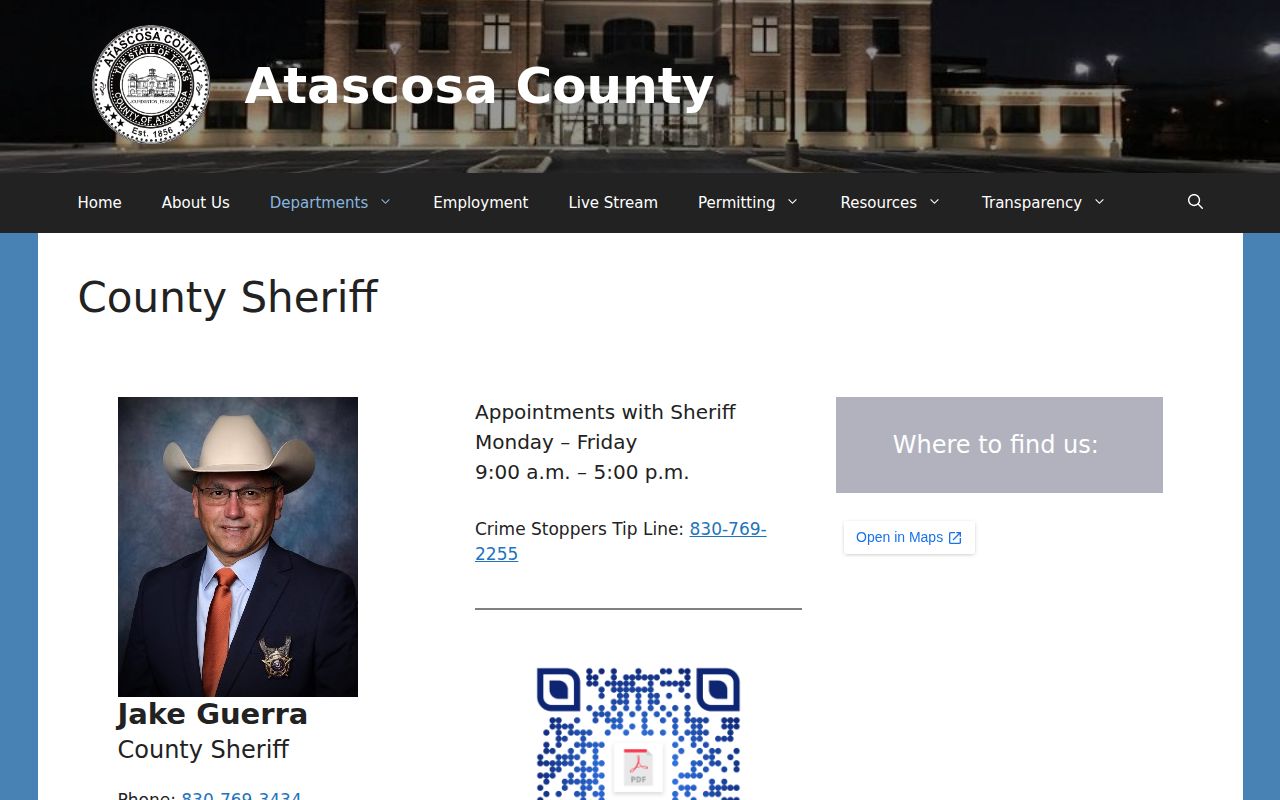
This image documents two daily processing times, not a web list covering the prior three days.
Request Atascosa Three-Day Records
Email a narrow Public Information Act request to reports@acso-tx.org. Supply the identifying details and exact 72-hour range. Ask for the booking sheet, release sheet or custody-release transaction, recorded release date and time, release type or authority, and receiving agency when the event was a transfer and the field is public. Request electronic copies and a written cost itemization before charges exceed a chosen limit.
ACSO publishes no local release-record fee schedule. Texas law permits redactions and withholding when an exception applies. Its procedural deadline for an agency seeking an Attorney General ruling is not a guaranteed completion date. Broad requests for every release can add cost or programming issues, so a name, booking number, and short date range are better.
Register with IVSS-Counties when current portal coverage offers notices for the relevant Atascosa event. Save the exact alert text, timestamp, agency, and identifier. “Released” and “transferred” are not synonyms. The court docket remains the source for the prosecution and can still be open after a valid jail release.
Atascosa TDCJ Release Gap
Texas creates a special negative-search problem. The TDCJ Online Inmate Search says it includes only people currently incarcerated in a TDCJ facility. A person can disappear from that public tool just when the post-release trail becomes important. The missing result is consistent with release, but it does not prove the date, type, or destination.
Use TDCJ incarceration history and release or discharge records after the person leaves state prison. Include the TDCJ or SID number when known. Ask whether the outcome was parole, mandatory supervision, a detainer transfer, or full discharge. State IVSS and the Parole Division can corroborate active supervision, while the court supplies the judgment and sentence context.
The TDCJ incarceration-history request page documents the historical-information channel.
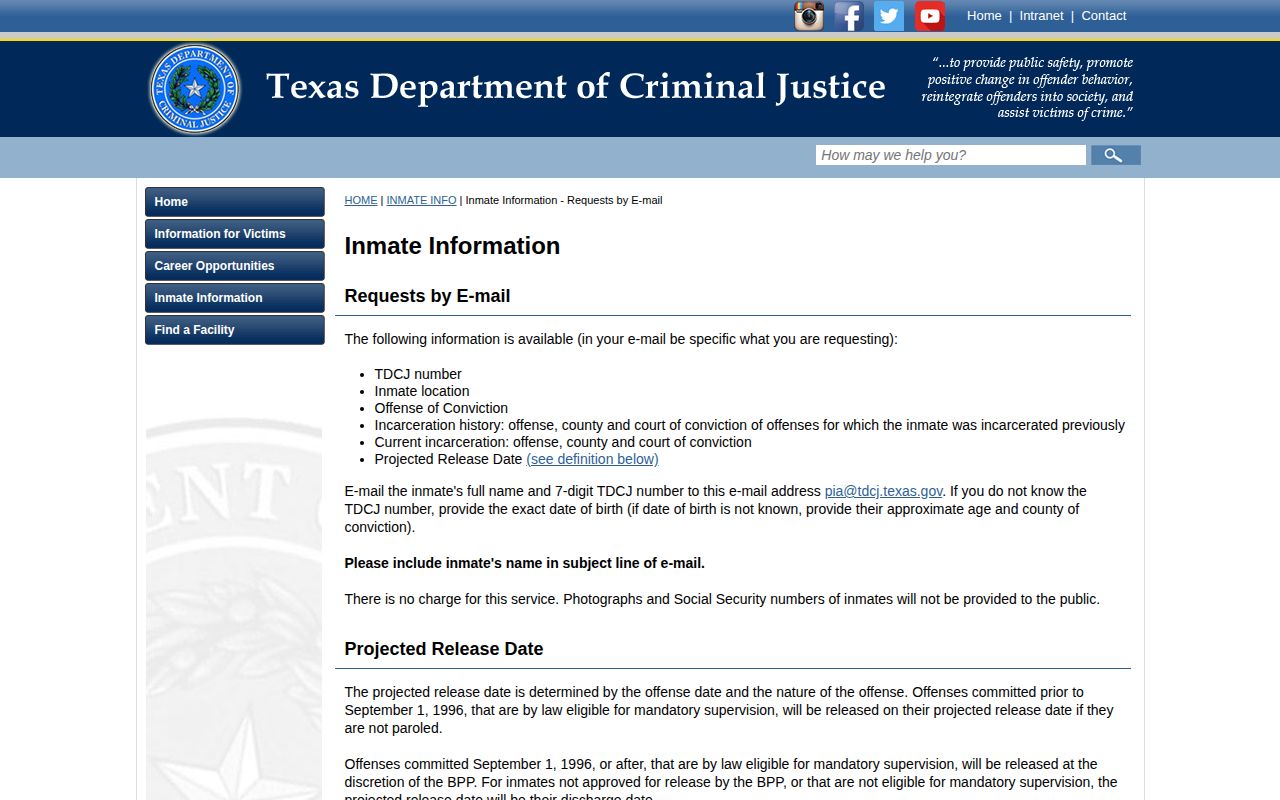
The historical request bridges the gap left when a former state inmate no longer appears in the current-custody search.
A current TDCJ result can show projected release, maximum sentence, and parole-review information. Those dates are not actual gate records. If the person was first held in Atascosa and then transferred, preserve the ACSO transfer sheet as the bridge between county and state custody. TDCJ processing can lag after transport, so a brief no-result period does not prove the person entered the community. Search by TDCJ or SID number when possible and match the conviction county and offense details.
Compare Atascosa Release Paths
The three-day window may contain events governed by different custodians. Match the record to the system before drawing a conclusion.
| Event | Primary evidence | Do not conclude |
|---|---|---|
| Left Atascosa County Jail | ACSO release transaction and Jail Records confirmation | That the person entered the community. |
| Transferred to TDCJ | County transfer sheet and later TDCJ intake | That ACSO release means freedom. |
| Left a Texas prison | TDCJ release history and supervision record | That a missing current search proves discharge. |
| Case ended or changed | Signed court judgment or order | That a jail event alone proves dismissal. |
A release on bond leaves the case active. Parole means the person is outside prison while serving the sentence under supervision. Full discharge means the sentence or supervision term has ended. These distinctions keep a 72-hour record factual.
Federal movements require another branch. A person can leave ACSO for U.S. Marshals or ICE custody without entering either a TDCJ prison or the community. BOP results address federal Bureau of Prisons custody only. ICE's locator has its own coverage limits. Follow the receiving-agency field, federal docket, or appropriate federal office rather than treating silence in a state tool as proof of release.
IVSS is corroboration, not the sole record. The county portal can cover participating county custody events, while state IVSS covers TDCJ incarceration, release, discharge, and supervision events. Capture the alert exactly. “Out of custody,” “released,” “transferred,” “parole approved,” and “discharged” describe different facts. Confirm an urgent or disputed event with the agency that reported it.
Note: Juvenile detention records are outside the adult release workflow and must not be inferred from adult ACSO or TDCJ results.