
Atascosa 24-Hour Release Access
No official Atascosa County Sheriff's Office rolling 24-hour release feed was located. The sheriff's official page does not publish a current roster, recent-release list, historic archive, verified feed fields, update pace, or online retention period. It also does not supply a feed URL. A commercial page bearing the county name is not the county's release list. The sound route is direct confirmation through ACSO Booking and Jail Records.
A 24-hour inquiry should name the person and state the exact start and end of the period. Include the time zone. Ask whether ACSO still holds the person, then ask for the release or transfer transaction. That record may distinguish a community departure from transport to TDCJ, another county, federal custody, treatment, or another agency. The Atascosa County released-inmate search gives the broader path for one named person when the custody trail crosses systems.
Check Atascosa Same-Day Releases
Start with the office that created the local custody record. The ACSO county page lists the main line as 830-769-3434. Booking and Inmate Information is extension 2231; Jail Records is extension 2239. Booking can address present custody. Jail Records is the better source for the recorded departure and its type. Keep the questions separate because “not here” does not state where the person went.
- Write down the full name, date of birth if known, booking number, and the exact 24-hour interval.
- Call extension 2231 to ask whether the person remains in ACSO custody.
- Call extension 2239 and request the release or transfer date, time, authority, and destination if public.
- Compare the transaction with the correct court case and any IVSS notice.
- If another agency received the person, confirm custody with that agency before describing the event.
Record the date and time of each check. When sources differ, do not assume the newest timestamp is right. Ask each custodian which booking, case, or transfer it covers. A bond order can exist before the jail completes identity, detainer, property, and release processing.
Atascosa Release Fields to Request
Because ACSO has not published a 24-hour feed, there are no verified web columns to describe. Request existing records instead of asking staff to create a new list. The following fields are useful targets, but the research does not establish that every field exists or must be disclosed in every case.
| Requested field | What it can establish |
|---|---|
| Full name and booking number | Connects the event to the correct custody episode. |
| Release date and time | Records when ACSO relinquished custody. |
| Release type or authority | May identify bond, court order, time served, or another recorded basis. |
| Receiving agency or destination | Can show that the departure was a transfer rather than community release. |
| Booking and release sheets | Provide the start and end context for the custody episode. |
A court judgment answers a different question. It can show a plea, sentence, dismissal, or bond order, but may not show the physical exit time. The release transaction and court record should be read together.
Request Atascosa Release Records
Send a narrow Texas Public Information Act request to reports@acso-tx.org. Identify the person, known booking number, approximate booking date, and the exact same-day interval. Ask for the booking sheet, release sheet or custody-release transaction, recorded date and time, release authority, and receiving agency if the event was a transfer and that field is public. Electronic copies are practical. Ask for an itemized estimate before charges exceed a stated amount.
ACSO does not publish a release-record fee schedule. Do not assume the record is free. Texas agencies may redact protected information or seek an Attorney General decision. The law's ten-business-day procedure for requesting such a ruling is not a promise that all records arrive within ten days. A targeted request is more useful than demanding “all releases,” which may require extra programming or cost.
The Atascosa County 72-hour release list process uses the same official channels with a wider interval. That range can help when the exact event day is uncertain.
Atascosa Release or Transfer
“Released by ACSO” can mean ACSO ended its custody. It does not always mean the person entered the community. A surety bond, cash bond, personal bond, court order, sentence satisfied, or probation placement may lead to community departure. A transfer to TDCJ, another county, ICE, the U.S. Marshals Service, or another custodial facility does not.
- Bond
- Conditional liberty while the case continues, not a dismissal.
- Time served
- A sentence or credit calculation authorized departure; the conviction is not erased.
- Transfer
- One custodian hands the person to another custodian.
- Discharge
- A sentence or supervision term has ended, which differs from physical release on parole.
If ACSO reports a transfer, follow the receiving system. TDCJ intake can take time to appear. County IVSS may corroborate a local event, while the state IVSS portal covers TDCJ custody and parole events. Federal locators cover only their own systems. Never turn a no-result into a broad claim of freedom.
Note: Quote the agency's status and preserve its timestamp instead of replacing precise custody language with the broader word “released.”
When Atascosa Releases Are Processed
ACSO publishes two inmate-release processing times: 8:00 a.m. and 10:00 p.m. daily. This is unusually clear local information. It is not a live 24-hour list, nor is it a guarantee that a named person will walk out at either time. An authorized departure may still require identity checks, detainer review, property work, and transport coordination.
The official source does not name the release door, a family waiting point, a holiday exception, or a queue rule. Those details must remain unclaimed. For a weekend event, “daily” supports use of the listed times, but Jail Records should confirm the actual transaction. A midday court order may be processed later, and an IVSS alert may not arrive at the exact moment the jail completes the release.
The official ACSO release information is shown in the captured county page below.
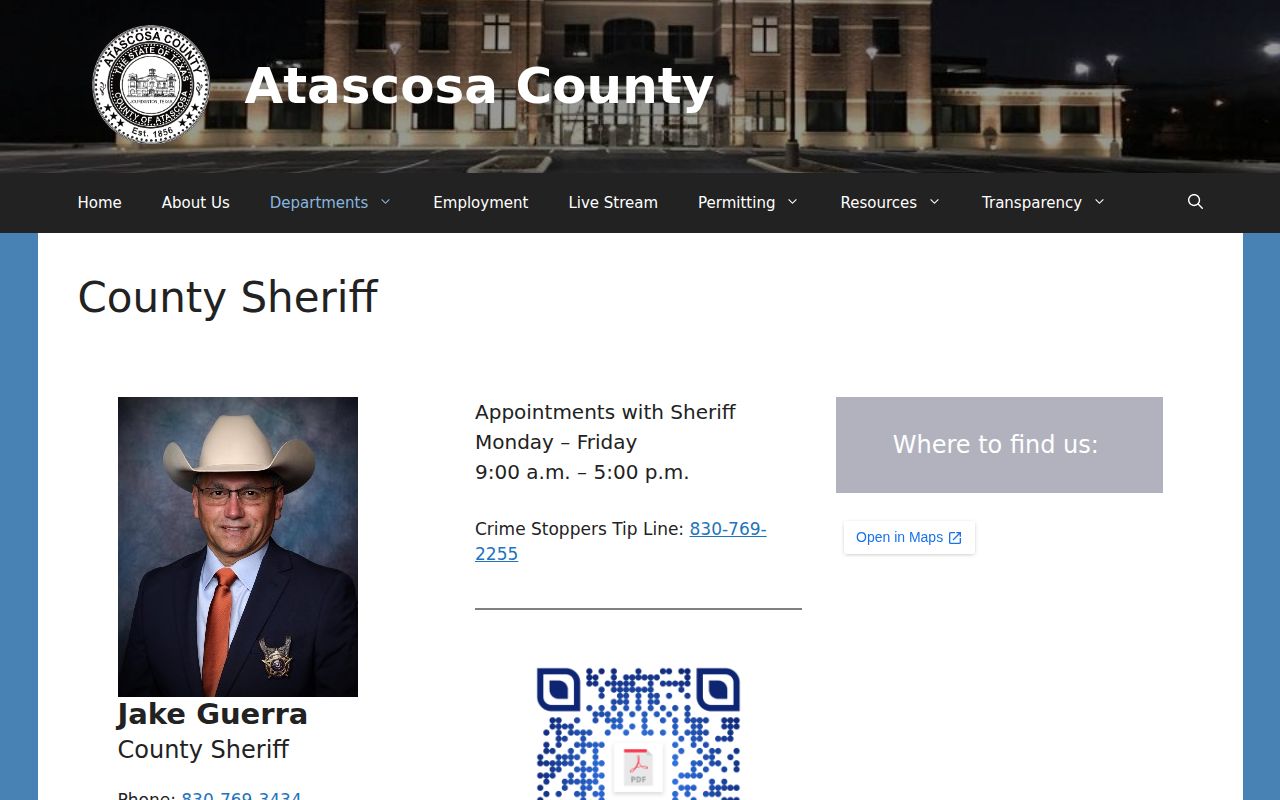
The image documents processing times and contact routes, not a list of people released during the day.
Getting Home After Atascosa Release
Cowboy Connect provides hourly time-point loops linking Jourdanton and Poteet with Pleasanton. Alamo Regional Transit accepts requests at 1-866-889-7433 or needaride@aacog.com during published weekday hours. A route deviation of up to one-half mile may be arranged for an added cost. The jail is not identified as a stop.
Treat transit as advance planning, not jail-door pickup. Confirm the route, fare, requested deviation, and pickup point directly with the operator. The county does not publish an exact jail exit or waiting area, so a rider should not be directed to an assumed location.
The county transportation page shows the local route framework.
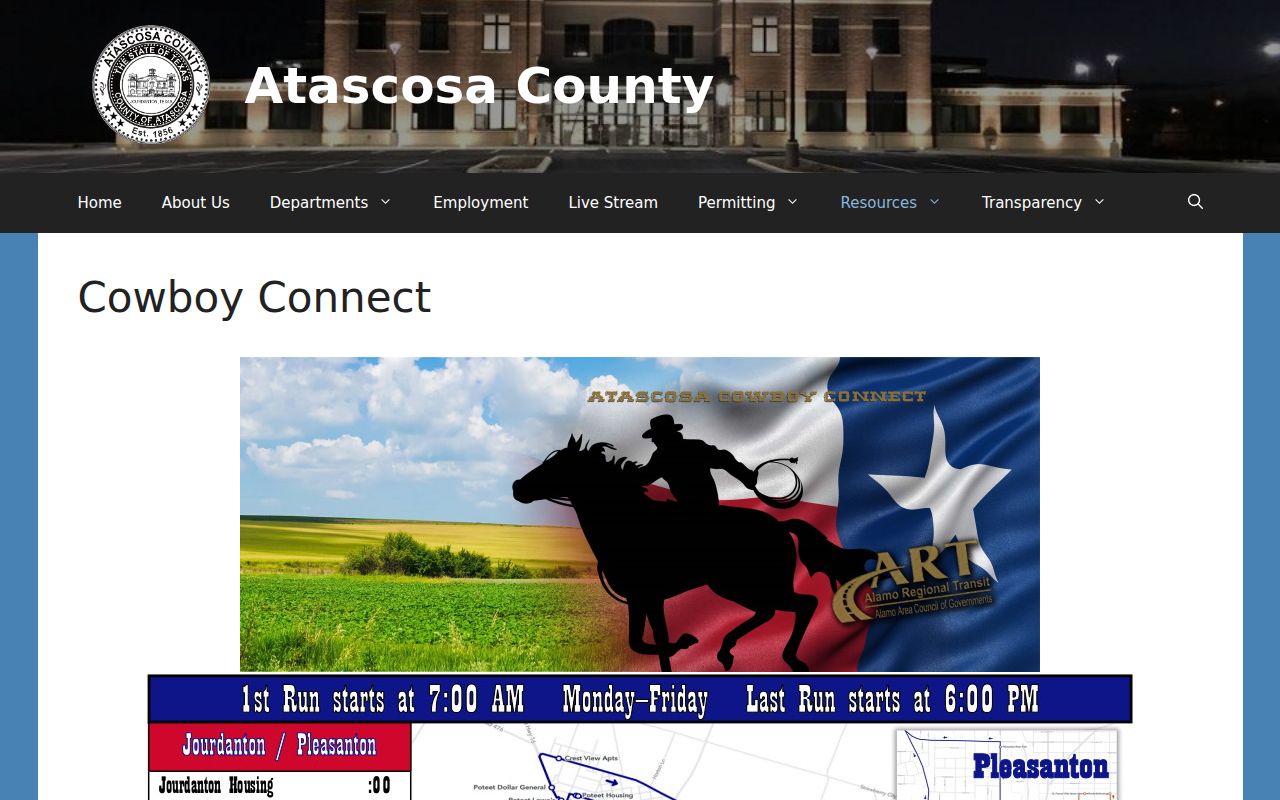
The route can help with regional travel only after the operator confirms a workable stop or deviation.
Atascosa Bond Fee and Release
The sheriff lists a State Bond Fee of $15 per surety bond, capped at $30, payable in exact cash or money order. This is an administrative fee. It is not the judge-set bond amount, a county bond schedule, or proof that release processing is complete.
After payment and bond approval, confirm the actual jail transaction. A pending detainer, identity issue, or another hold can change what happens next. The court record can show the bond order, while Jail Records supplies the custody event. Both facts matter.
Atascosa Release Posts Are Selective
ACSO links an official Facebook page as a public-notices channel, but no sheriff jail app, recent-release gallery, or booking-photo archive was found. Social posts may focus on arrests or selected safety notices. They are not a same-day census, and silence cannot confirm that anyone was released.
Use a post only as a lead. Match the agency, date, booking number, and identity, then obtain the release transaction and court disposition. An arrest photo does not prove a conviction, current custody, or the outcome of the case.
Durable verification often requires the correct clerk as well. District and felony cases pass through the Atascosa District Clerk, while county misdemeanor cases use the County Clerk and County Court at Law path. A search in only one portal can miss the relevant case. Look for the bond order, judgment, sentence, dismissal, or later docket event, then compare its case number and date with the ACSO booking. The court record explains the prosecution; it does not replace the jail's recorded exit time.